

27th February 2026

Highspeed Media.
The electoral race in Kathmandu–6 is intensifying as the Aam Janata Party amplifies its campaign with a strong digital and grassroots push centered around its election symbol :the mobile phone.
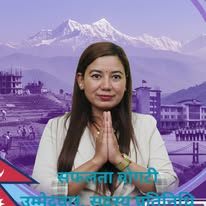
Candidate Safalta Bogati, representing the Aam Janata Party, has emerged as one of the younger contenders in the constituency, positioning her campaign around governance reform, anti-corruption messaging, and youth representation. Her recent public statements widely circulated on Facebook and YouTube campaign clips emphasize voter empowerment, accountability, and what she describes as a shift from “complaining citizens to decision-making citizens.”
Campaign Messaging: Governance Over Grand Promises
In various online campaign appearances and interviews shared across social media platforms, Bogati has stated that the primary responsibility of a Member of Parliament is policy formulation and oversight not merely distributing local development funds. This framing seeks to differentiate her platform from what she characterizes as traditional patronage-style politics.
Supporters of the Aam Janata Party have actively promoted slogans encouraging voters to choose the mobile symbol, presenting it as a call for generational change and institutional reform. Social media content associated with the campaign frequently highlights themes such as transparency, youth engagement, and resistance to corruption.
Party Leadership and National Presence
The Aam Janata Party is led by Prabhu Sah, a national political figure who has previously held parliamentary roles. His public outreach activities including constituency visits and public addresses have also been widely circulated online, reinforcing the party’s broader campaign narrative beyond Kathmandu–6.
Observers note that while the party does not command the same organizational scale as larger national parties, it has attempted to leverage social media visibility and localized campaigning to strengthen its foothold among urban voters, particularly younger demographics.
Competitive Landscape in Kathmandu–6
Kathmandu–6 remains a competitive constituency historically influenced by larger parties such as the Nepali Congress, the Communist Party of Nepal (Unified Marxist–Leninist), and other established political forces. Analysts suggest that new and smaller parties face structural challenges including limited resources and entrenched voter loyalties. However, they also acknowledge that urban constituencies like Kathmandu–6 tend to be more receptive to alternative narratives and reform-focused campaigns.
Social Media as a Campaign Battlefield
Facebook live sessions, short YouTube campaign clips, and digital poster campaigns have become central tools in the Aam Janata Party’s strategy. The repeated emphasis on the “mobile” symbol both literally as the ballot symbol and metaphorically as a symbol of connectivity and modern governance reflects an attempt to align campaign branding with youth culture and digital awareness.
Political commentators indicate that while online traction does not always translate directly into votes, it plays an increasingly influential role in shaping political discourse, especially among first-time and Gen Z voters.
The Broader Democratic Context
As Nepal approaches polling day, Kathmandu–6 illustrates a broader national pattern: traditional parties defending long-held influence while newer actors frame themselves as vehicles of reform and generational transition.
Whether the digital enthusiasm and reform-oriented messaging of the Aam Janata Party will translate into electoral success remains to be seen. What is clear, however, is that the constituency has become a microcosm of Nepal’s evolving democratic contest one shaped as much by smartphones and social platforms as by street-level campaigning.



तपाईको प्रतिक्रिया