

16th March 2026

Highspeed Media
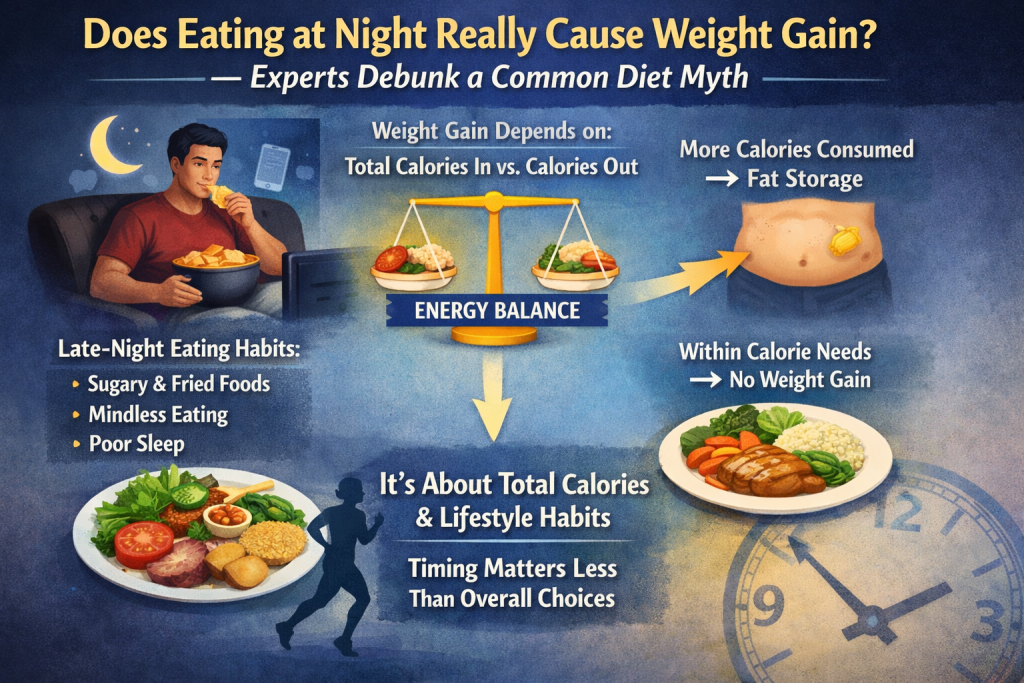
The belief that eating at night automatically leads to weight gain has long been a popular diet myth, but nutrition experts say the science behind body weight is more complex than simply the timing of meals. According to health researchers, weight gain or loss primarily depends on the total number of calories consumed throughout the day compared with the calories the body burns. In other words, the overall energy balance rather than whether food is eaten during the day or at night is the key factor influencing body weight. Studies in nutrition science show that if a person consumes more calories than the body needs, the excess energy is stored as fat regardless of the time the food is eaten. Conversely, if daily calorie intake remains within the body’s energy requirements, eating dinner or a light snack in the evening does not automatically result in weight gain.
However, experts point out that the myth likely persists because late-night eating is often linked with unhealthy habits. Many people who eat late at night tend to consume high-calorie foods such as sugary snacks, fried items, or processed foods while watching television or using their phones. These habits can lead to “mindless eating,” where individuals consume more calories than they realize. Research also suggests that irregular sleep schedules and late-night snacking may disrupt metabolism and appetite-regulating hormones, which can indirectly contribute to weight gain over time. Additionally, eating very large meals right before going to bed may cause digestive discomfort and poor sleep quality.
Nutritionists therefore recommend focusing not only on meal timing but also on portion size, food quality, and overall daily calorie intake. A balanced dinner consisting of vegetables, protein, and healthy carbohydrates in moderate portions is generally considered safe even in the evening. Maintaining regular meal patterns, avoiding heavy or sugary snacks late at night, and ensuring adequate physical activity throughout the day are more effective strategies for maintaining a healthy weight. In short, scientific evidence indicates that it is not the clock but the total calories and lifestyle habits that ultimately determine whether a person gains or loses weight.



तपाईको प्रतिक्रिया