

15th June 2026

Highspeed Media
Rising Dengue Cases Raise Public Health Concerns: Experts Urge Prevention and Early Treatment
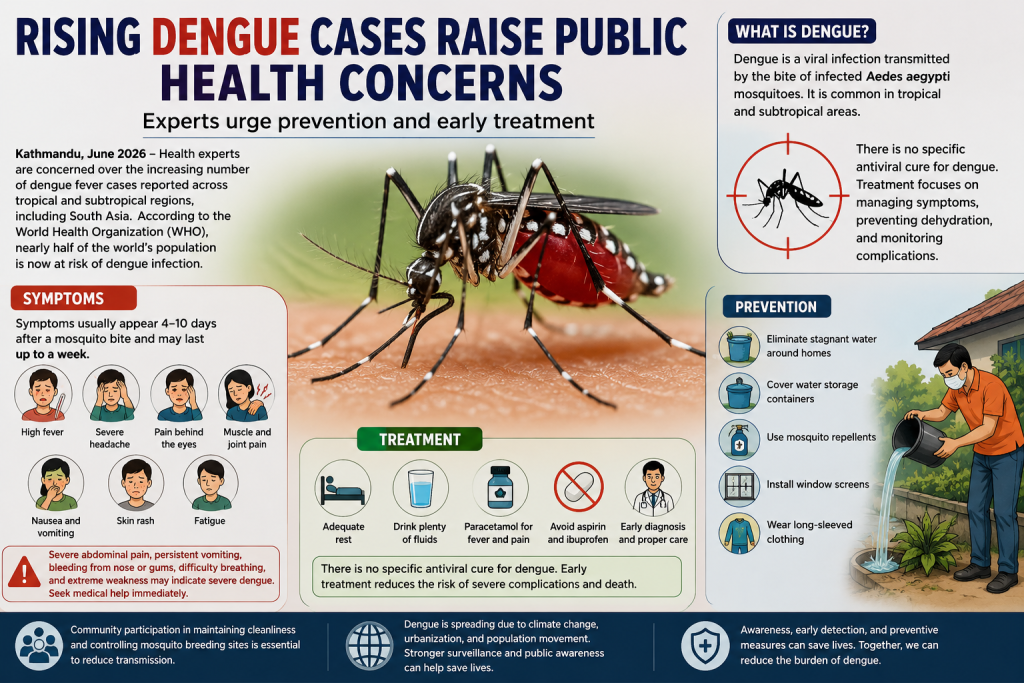
Kathmandu, June 2026 : Health experts are raising concerns over the increasing number of dengue fever cases reported across tropical and subtropical regions, including South Asia. Dengue, a mosquito-borne viral disease, has become one of the fastest-spreading infectious diseases in the world, affecting millions of people every year. According to the World Health Organization (WHO), nearly half of the world’s population is now at risk of dengue infection.
Dengue fever is caused by the dengue virus, which is transmitted primarily through the bite of infected Aedes aegypti mosquitoes. The disease is common in warm and humid climates and often increases during and after the rainy season when mosquito breeding sites become more abundant. While many infected individuals experience mild symptoms or none at all, some cases can develop into severe dengue, a life-threatening condition requiring immediate medical attention.
The most common symptoms of dengue include high fever, severe headache, pain behind the eyes, muscle and joint pain, nausea, vomiting, skin rash, and fatigue. Symptoms usually appear four to ten days after a mosquito bite and may last for up to a week. Health professionals warn that severe abdominal pain, persistent vomiting, bleeding from the nose or gums, difficulty breathing, and extreme weakness may indicate severe dengue and require urgent hospitalization.
Currently, there is no specific antiviral cure for dengue fever. Treatment mainly focuses on managing symptoms, preventing dehydration, and monitoring complications. Doctors recommend adequate rest, drinking plenty of fluids, and using paracetamol to reduce fever and pain. Medicines such as aspirin and ibuprofen should be avoided because they can increase the risk of bleeding. Early diagnosis and proper medical care significantly reduce the risk of severe complications and death.
Prevention remains the most effective way to combat dengue. Health authorities advise people to eliminate stagnant water around homes, cover water storage containers, use mosquito repellents, install window screens, and wear long-sleeved clothing to avoid mosquito bites. Community participation in maintaining cleanliness and controlling mosquito breeding sites is considered essential for reducing transmission.
Public health experts emphasize that awareness, early detection, and preventive measures can save lives. As dengue continues to spread to new regions due to climate change, urbanization, and population movement, governments and communities are being urged to strengthen surveillance, improve sanitation, and promote public education campaigns. With timely action and collective efforts, the burden of dengue can be significantly reduced.



तपाईको प्रतिक्रिया