


Ravindra P. Upadhyay

AGM-Sales ,Brij Additives Pvt Ltd.
(Article )
Sales seems to be simple but it’s tough and technical too. To drive revenue of any kind of business, we need to sell either goods or services and the process ends only when customer becomes happy and can be retained for long.
Sales process varies from product to product and which is derived by the core values of the individual organization. There are many companies which are using nine steps of Standard Sales Procedure and there are many others that are using seven steps. Here, let me explain few common five steps of Standard Sales Procedure which I have been guiding to execute the same to my teams since past sixteen years.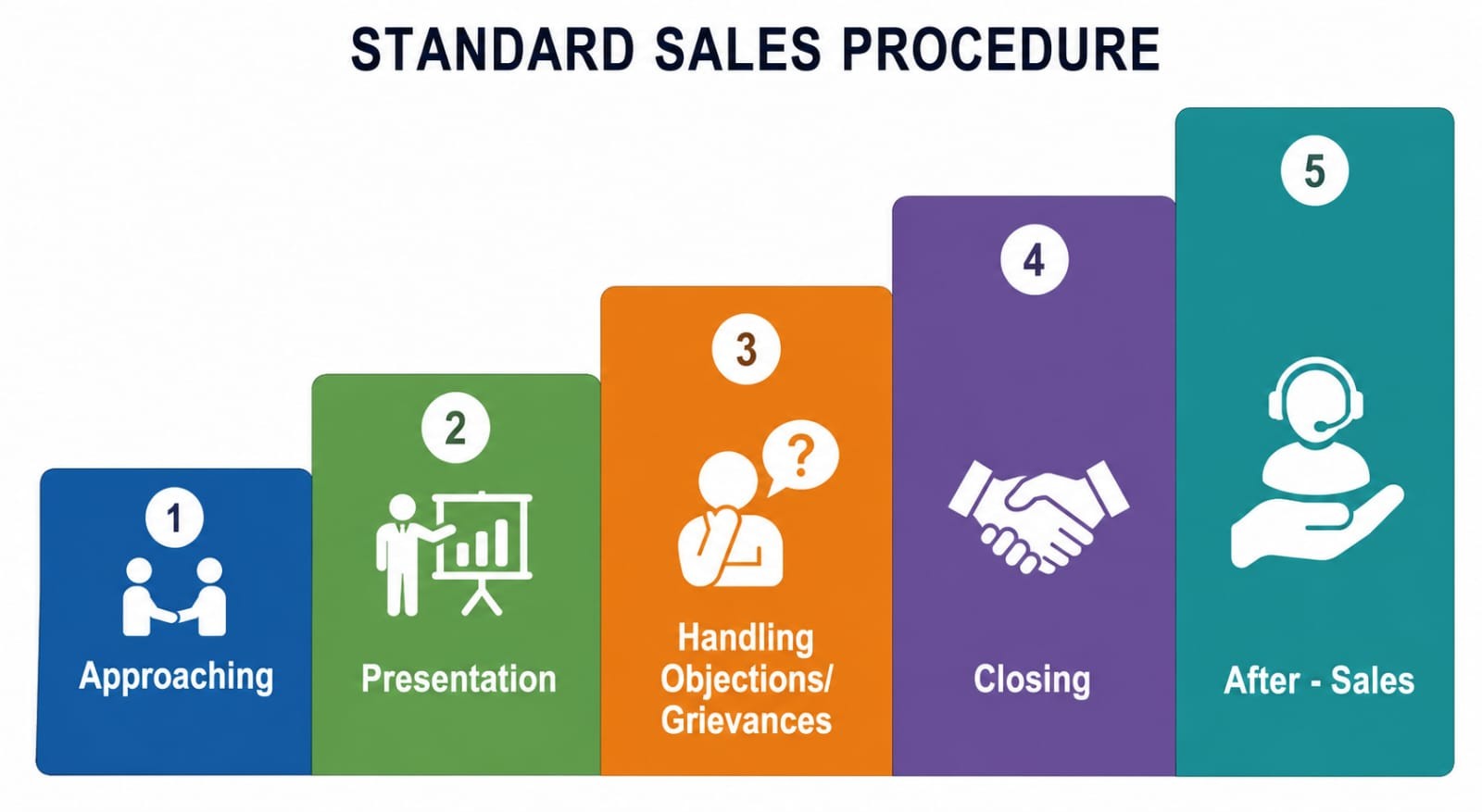
- Approaching -First, need to find/identify the potential buyers related to the product you sell and approach, at the same time understand the need of the customer.
- Presentation-Describe about the product quality, price, discounts, offers, credit policy everything just to make the customer easy to compare with their other products/services which can fulfill their needs.
- Handling Objections/Grievances-Need to address concerns or doubts the buyer is having. If it is the existing buyer, then grievances have to be solved. If it is the prospects, then all the objections he is having have to be resolved.
- Closing -Final commitment is done at this stage and signing a contract or receiving payments are executed.
- After – Sales, Follow up for customer satisfaction and to look for future referral from the existing customer. And the main important thing is to ensure long term loyalty at this stage of Sales Procedure.
In performance review of any business you would hear the term KPI. Due to economic changes, businesses are getting challenges day after another. Organizations understand how well they are performing in comparison to their goals and objectives if they review KPIs. This may also help organizations to understand whether they are on right track towards their objectives or not. KPIs should always be easy to measure and count. Some of the common KPIs that are applicable and practiced in sales are mentioned below:
- Sales Revenue Growth-It measures the percentage increase in revenue over a set period. (comparison with last year and this year)
- Underlying Volume Growth (UVG)-It is a performance metric measuring the change in the physical quantity of the products sold, excluding impacts from price increase over a set period.
- Activation Plan-Setting activation plan such as a marketing campaign, customer meets or any other events in current business year provides a quantitative measure of performances over last year.
- Distribution Expansion-It may be appointment of new dealers, new retailers or penetrating a new market in comparison with last business year which is quantify by numbers. This helps to measure the performance in terms of distribution expansion.
- Controlling Ageing (<90 days) -It acts as a report to manage cash flow, identify bad debts and monitor customer payment behavior. Ageing is usually in 30 – day buckets (e.g. 0-30, 31 -60, 61-90 + days)
Now the question is why the Standard Sales Procedure and KPIs are important in Sales? – In every business, Sales is the only source of income whether you sell goods or services. Hence, without an everyday practice of Standard Sales Procedure and a set of KPIs it is impossible to achieve the strategic goals and objectives of any organization. Being a sixteen years plus a Sales Practitioner, I have been practising these all tools to train my teams and have been able to achieve the strategic goals of the management. Hence, I would summarize the benefits of Standard Sales Procedure and KPIs as below:
- Improved efficiency and Productivity-Adhering Standard Sales Procedure and KPIs definitely increases work efficiency and improves productivity in the work. Let’s discuss what is productivity in Sales and how can it be measured.
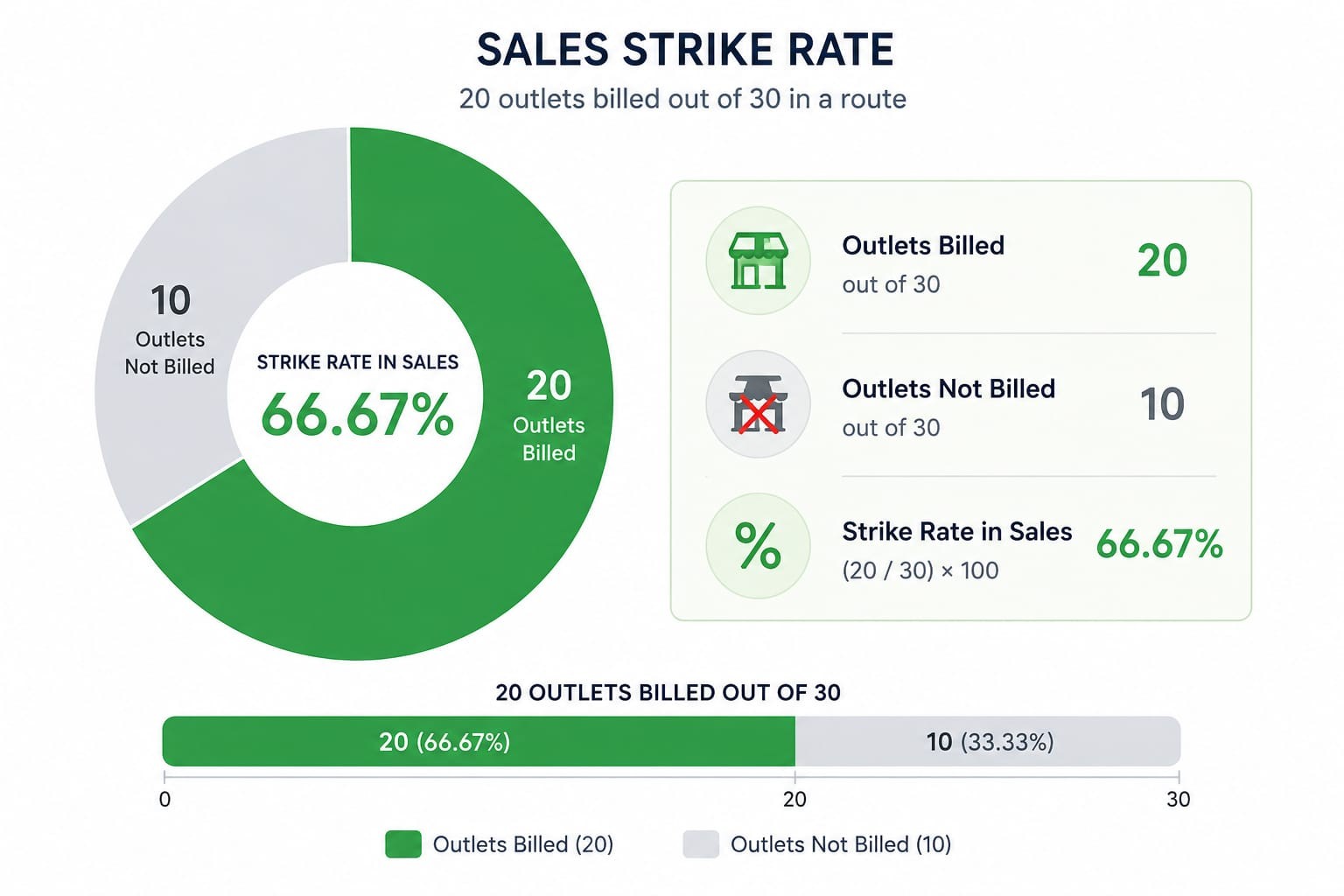
A) Strike Rate-A strike rate in sales is a key performance indicator which can be calculated as: Total number of bills (order taken) divided by total number of outlets (Opportunities) *100 %. For example, if 20 outlets are billed out of 30 in one route then the strike rate is 66.67%. Once it is reviewed in a daily basis then productivity can be enhanced by identifying the non-billed outlets with the valid reason.
 B) Line Per Call-Line per call is a key performance metric measuring the number of lines a sales man makes in each invoice. If a sales man takes order from 15 outlets and in total sales 60 SKUs then LPC is 4. High LPC suggests strong range selling while low LPC indicates only a few popular items are sold.
C) Effectively Covered Outlet (ECO)- ECO is effectively covered outlet; it is a sales metric representing the number of retail outlets that have placed at least one order within a given timeframe usually in a month.
2. Motivation-When KPIs are measurable and time bound, they provide a clear target that motivates sales representatives once achieved and can be rewarded accordingly.
3. Identification of Gap-KPIs reveal specific gaps in a sales representative’s skills such that a line manager can plan a coaching and training by analyzing it.
4.Planning-By analyzing the past KPIs, the management can accurately plan for the future. So it will give a pathway to make a proper business plan for next year.
5. Improved Strategic Goals-Clearly set KPIs help to achieve strategic goals of the management such as market share and bottom line. All the goals and objectives of each functional unit are interlinked with strategic goals of the organization.
This is how Standard Sales Procedure provides a consistent roadmap to sales representatives in a daily basis whereas KPIs acts as a compass to ensure daily actions to be linked with long terms objectives and goals of the organizations and hence these tools are vital for forecasting, smooth operation and performance tracking within an organization.


तपाईको प्रतिक्रिया